
Why emotions drive our reactions
In the "previous blog", we explored the different parts of the human brain and briefly discussed the function of each region. Understanding the brain is essential because it controls every aspect of our thoughts, behaviors, and experiences.
In this blog, we will discuss something that connects every human being and even animals. By now, you may have already guessed it from the title.
Yes, we're talking about Emotions.
Emotions play a vital role in our daily lives. Every individual experiences emotions differently, and at any given moment, people may be going through a wide range of emotional states. Some may feel happiness and excitement, while others may experience sadness, stress, anger, fear, love, or even hatred.
In this article, we will explore what emotions are, why they occur and how the brain processes them & science behind them, We will also discuss why some individuals become emotional more easily than others.
What is Emotions:
Everybody has felt love, hate, fear, anger, and joy. What, however, connects these different mental processes under what is commonly referred to as "emotions"?
We all have emotions and they serves important purposes. They help motivate us to actions, Emotions helps us to communicate with each other like body language, facial expressions are reflections of how we feel.
Sometimes our emotions develop slowly, while at other times they appear suddenly. There are days when we wake up feeling happy, stressed, or upset without knowing the exact reason.
Emotions also help us respond to different situations. For example, fear can warn us about danger, while happiness can encourage us to repeat positive experiences. We may also feel connected to a beautiful painting, a song, or a place without fully understanding why.
Sometimes you have gut feeling that something is not right about the situation, your gut feeling is not always accurate but does inform you how you should consider the situation.
Let's understand what happens inside our minds that makes us feel these emotions.
There are several brain regions involved in generating and processing emotions but here we discussed three major areas that are involved 1. Amygdala, 2. Prefrontal cortex, 3. Hippocampus.
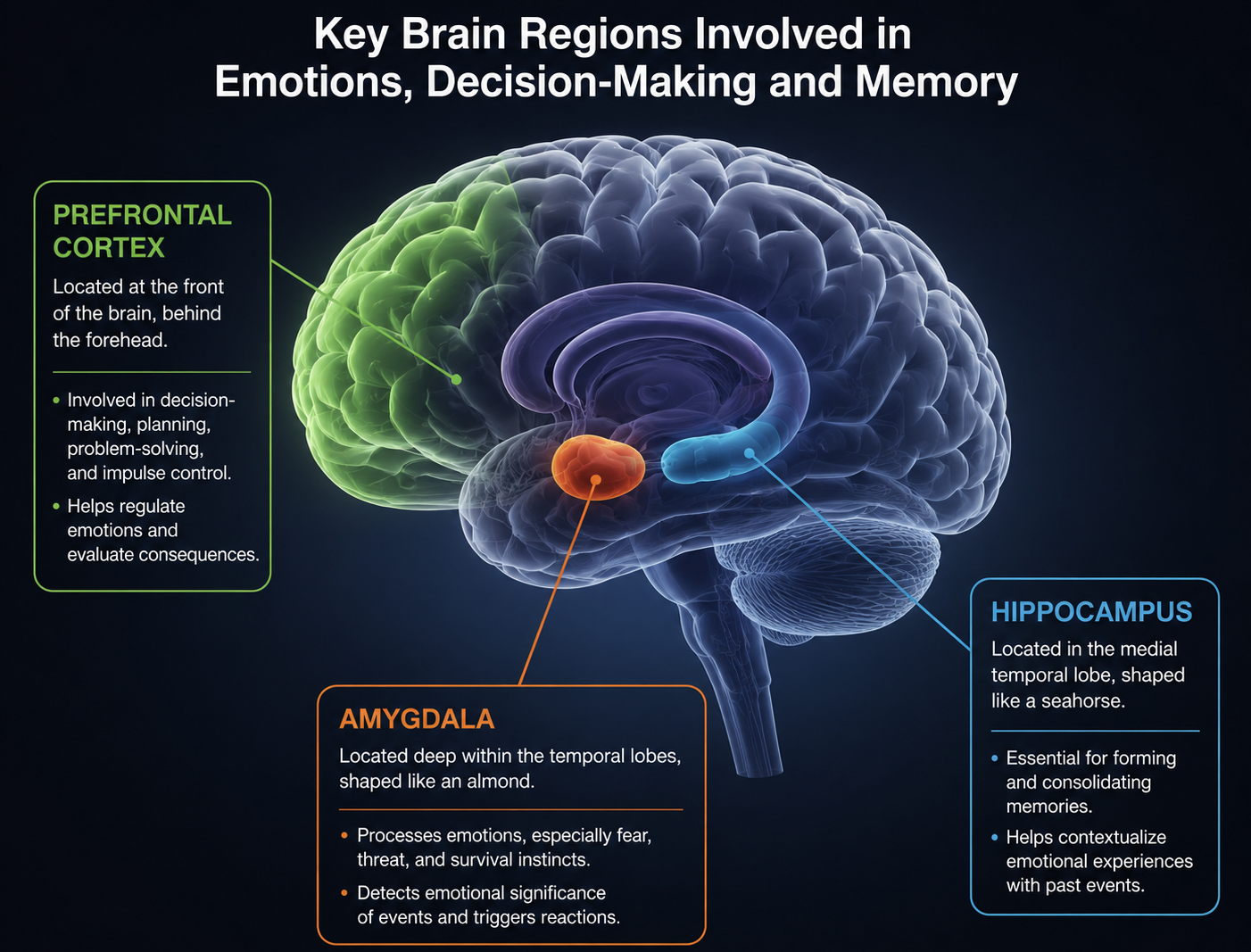
Amygdala
The amygdala is a small structure locate deep in the brain within the temporal lobes that acts as an emotional alarm system like a threat detector.
It is a subcortical structure which means its acts on instinct and not reasoning, reasoning happens in cortex.
Example of How the Amygdala Works
Imagine you are driving in traffic and suddenly another car comes toward you very fast. Before you even realize how close the car is, your amygdala quickly detects the danger and sends signals to your body. This causes the release of stress hormones like adrenaline and cortisol, helping you react quickly.
Because of this, you may instinctively brake, move out of the way, or protect yourself before you consciously think about what is happening.
The amygdala also helps connect emotions to memories. It plays a key role in remembering emotional events and helps you recognize and understand facial expressions, especially those showing fear and other strong emotions.
Hippocampus
The hippocampus is a brain structure located in the temporal lobe. It plays an important role in forming, storing, and recalling memories, including emotional experiences.
Example of How the Hippocampus Works
For example, imagine you go out with your friends and meet someone new. During the outing, that person is rude to you, making you feel annoyed, embarrassed, or upset. A few weeks later, your friends organize another gathering and the same person is there.
As soon as you see them, you may start to feel uncomfortable, tense, or anxious, even though they have not said anything to you. This happens because your hippocampus helps you remember the previous experience and connects that person with the unpleasant emotions you felt.
The hippocampus also helps link emotions to the context in which they occur. It allows you to remember not only what happened, but also where it happened, when it happened, and who was involved. This helps your brain use past experiences to understand and respond to similar situations in the future.
The Prefrontal Cortex
The third important brain structure involved in emotions is the prefrontal cortex, which is located at the front of the brain. It acts as the brain's thinking, planning, and decision-making center.
When an emotional situation occurs, the prefrontal cortex helps evaluate what is happening, considers possible outcomes, and determines the most appropriate response. In other words, it helps you think before you react.
The prefrontal cortex is closely connected to both the amygdala and the hippocampus. After analyzing a situation, it sends signals back to the amygdala to help regulate the intensity of emotional reactions. This is why the prefrontal cortex is often described as the brain's "emotional control center."
What Happens When the System Becomes Unbalanced?
Stressful or traumatic experiences, especially during childhood, can sometimes lead to an overactive amygdala. When the amygdala becomes highly activated, it can overpower the calming and reasoning functions of the prefrontal cortex and the memory-processing functions of the hippocampus.
As a result, emotions may become so intense that it becomes difficult to think clearly or reassure yourself that you are safe. Instead of using reasoning and past experiences to understand the situation, your brain may react as if there is an immediate threat.
When this happens, the amygdala can dominate the emotional system, leading to strong emotional reactions that are based more on fear than on careful evaluation. This can contribute to symptoms such as intrusive memories and flashbacks.
During a flashback, a person may feel as though a past event is happening again in the present moment. Because the amygdala is highly active, the brain may struggle to use the contextual information stored by the hippocampus or the reasoning abilities of the prefrontal cortex to recognize that the danger is actually in the past.
In a healthy emotional system, the amygdala, hippocampus, and prefrontal cortex work together to help us react appropriately, learn from experiences, and regulate our emotions effectively.