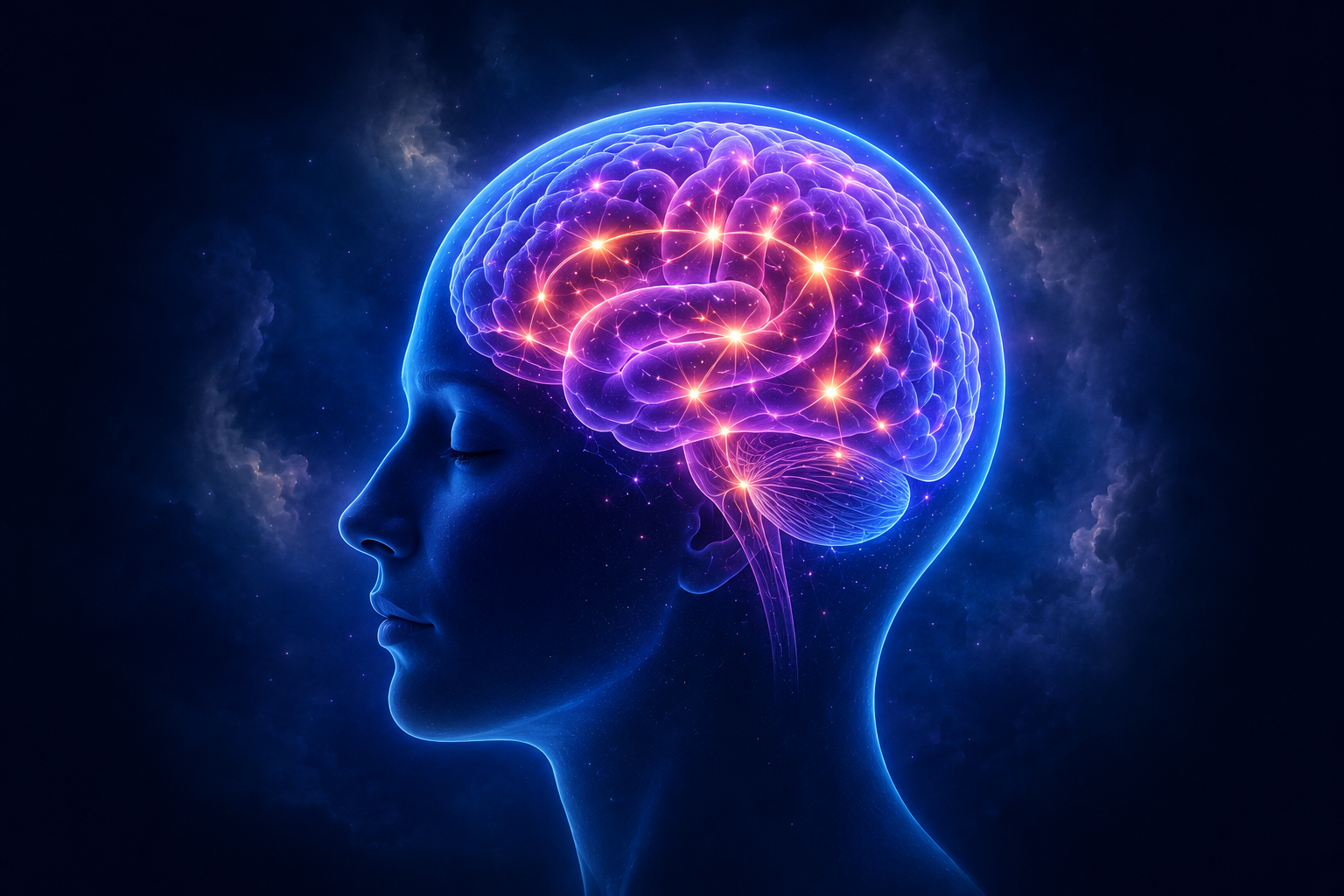
How Your Brain Changes During Sleep and Dreams
We have to first look into the design of sleep itself in order to fully understand what happened during dreams.
Modern neuroscience has helped scientists understand more about how the brain works during dreaming. Sleep is not simply a time when the body and brain rest. Instead, it is an active process with different stages.
There are two main types of sleep: REM (Rapid Eye Movement) sleep and NREM (Non-Rapid Eye Movement) sleep. REM sleep is a stage in which the brain becomes highly active, and vivid dreams are more common.
NREM Sleep (Non-Rapid Eye Movement):
NREM sleep includes several stages, during which the body gradually becomes more relaxed and the brain's activity changes. Together, REM and NREM sleep form the different stages of our normal sleep cycle.
Stage 3 (NREM): Deep sleep starts. Waking someone from this stage is difficult because the body is repairing tissues and growing muscle and bone.
Stage 4 (NREM): Slow delta waves are indicative of , the deepest state of sleep. Both physical recovery and immune system wellness depend on this.
REM Sleep (Rapid eye movement):
Rapid eye movement causes the brain to become almost awake. REM sleep is when most of your dreams occur, and these dreams are typically more vivid. while muscle groups in the body are temporarily paralyzed to stop them from being acted out.
What Happens to Your Brain While Dreaming?
Let's now examine what happens to your brain while you dream.
Every night, while your body rests in bed, your mind can create stories full of colors, emotions, memories, and exciting experiences. You may dream about speaking a language you do not know, flying over places you have never visited, or meeting people who have passed away. You can also experience strong emotions such as happiness, sadness, fear, or surprise, even though you are completely disconnected from the outside world.
During the night, your brain goes through different sleep stages in cycles of about 90 minutes. Each cycle includes both NREM and REM sleep. As the night goes on, the REM periods become longer. Early in the night, REM sleep may last only a few minutes, while in the early morning, it can last an hour or more.
These sleep cycles are controlled by different parts of the brain and by chemicals called neurotransmitters, such as serotonin, dopamine, norepinephrine, and acetylcholine.
Serotonin: Serotonin helps regulate mood, sleep, and the sleep-wake cycle.
During REM sleep, its activity decreases, allowing the brain to enter the unique state associated with dreaming.
Dopamine: Dopamine plays an important role in motivation, reward, emotions, attention, and movement.
During sleep, Dopamine Can influence emotions, motivation, and unusual or vivid experiences during dreams
Norepinephrine: Norepinephrine helps the brain maintain alertness, attention, and responses to stress.
Its activity becomes very low during REM sleep, which may contribute to the unusual and less logical nature of dreams.
Acetylcholine: Acetylcholine supports learning, memory, attention, and communication between brain cells.
During REM sleep, its activity increases and stimulates brain regions involved in vision, emotions, and memory, helping create vivid dreams.
During REM sleep, acetylcholine increases, making areas of the brain related to vision, emotions, and memory more active. At the same time, serotonin and norepinephrine levels decrease. This helps keep your body muscles relaxed and reduces the brain's normal logical control.
This creates a strange situation that your brain is highly active while your body is mostly unable to move. This combination provides the perfect conditions for vivid and sometimes unusual dreams.